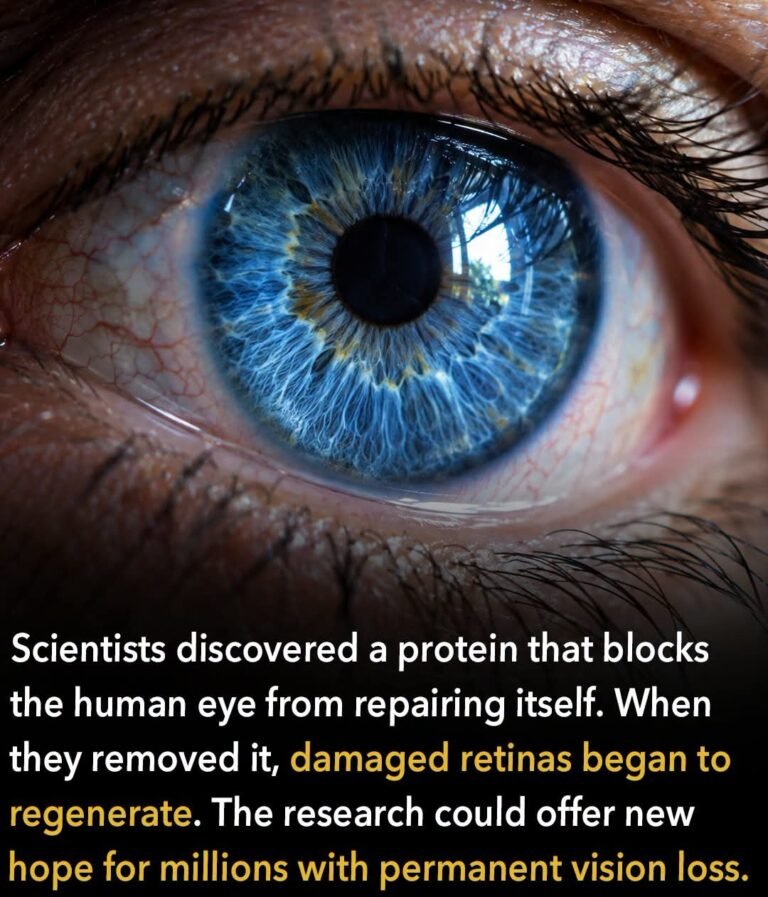
For years, scientists have known that zebrafish can do something mammals can’t: repair their own damaged retinas. When a zebrafish’s retina is injured, cells called Müller glia reprogram themselves into new neurons and restore vision. In humans, that process doesn’t happen. Until now, nobody fully understood why.
In April 2025, researchers at KAIST in South Korea published a study in Nature Communications that found the answer. A protein called PROX1, normally found in retinal neurons, transfers into neighboring Müller glia cells after an injury. Once inside, it acts like a molecular brake, shutting down the glia’s ability to regenerate.
The key discovery was that Müller glia don’t produce PROX1 on their own. They absorb it from neighboring cells. Block that transfer, and the regeneration process restarts.
In animal models, researchers were able to block PROX1 and trigger the regeneration of retinal neurons. Some subjects showed delayed vision loss in models of retinitis pigmentosa, one of the leading causes of inherited blindness.
The research is still in its early stages. It has been tested in animals, not yet widely in humans, though a separate clinical trial for a related retinal reprogramming therapy began in June 2026.
But for millions of people who were told their vision loss was permanent, the science just took a major step forward 💛