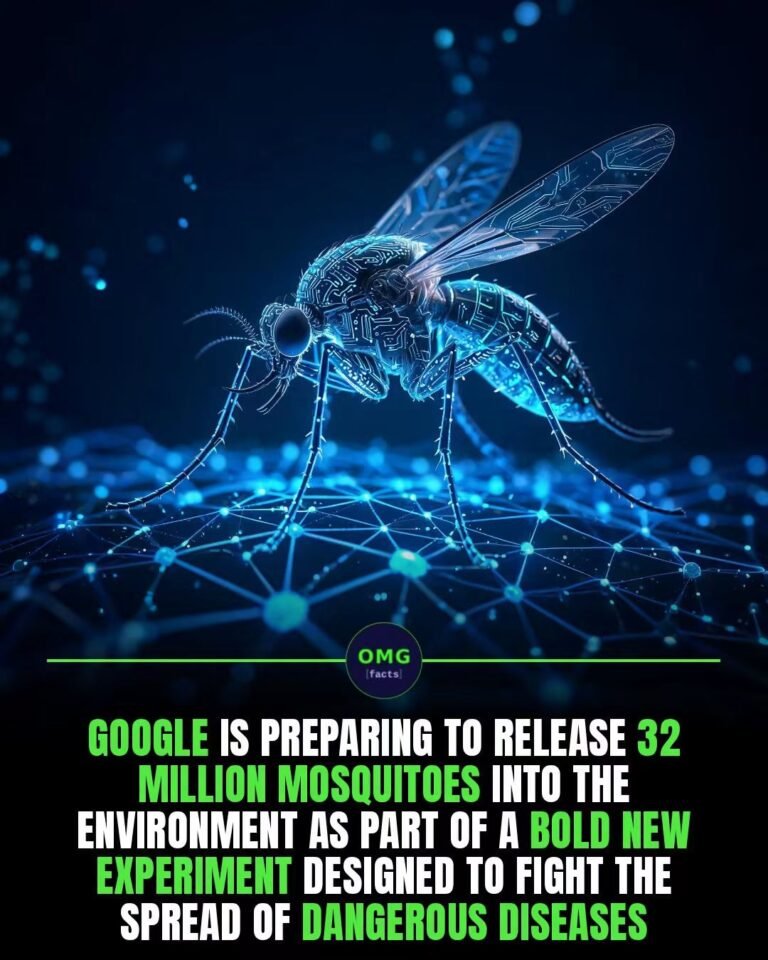
🦟 Innovative biological solutions
Picture this: the same insects that spread deadly diseases are now raised in labs and turned against themselves. Alphabet, the parent company of Google, has released a massive fleet of mosquitoes through its life sciences division, Verily, to do exactly that. By sending millions of these insects into the wild, the project works to crash the populations of harmful species that carry Zika, dengue, and chikungunya.
🔬 The science of sterilization
The approach depends on a bacterium called Wolbachia. Wolbachia occurs naturally in many insect species, but not in the Aedes aegypti mosquito. Scientists infect male mosquitoes with the bacterium inside a high tech facility, then release them into the environment. When these lab males mate with wild females, the Wolbachia stops the eggs from hatching, breaking the reproductive cycle of the local population. No genetic modification is involved.
🎯 Advanced tracking and automation
Several high tech systems keep the project running smoothly at every stage:
* Automated mass rearing systems that pump out millions of insects every week.
* Algorithms that pick the best release points for coverage across specific neighborhoods.
* Release vans fitted with sensors that track environmental conditions and check on mosquito survival.
* Sorting machines with computer vision that separate males from females with near perfect accuracy.
📈 Proven results in the field
Early trials in California and other countries have hit success rates that blow past traditional pest control. In some test zones, invasive mosquito populations dropped by more than ninety five percent within a single season. That drop happened without chemical pesticides, which can kill bees and butterflies or pollute local water sources.
🌍 A global health vision
As climate change pushes disease carrying mosquitoes into new regions, biological interventions like this one are becoming necessary public health tools. By scaling up the production and release of these specialized males, researchers want to build a sustainable, environmentally friendly way to shield communities from life threatening illnesses. The method targets a problem that hits hundreds of millions of people worldwide every year.
Facts checked by @omgfacts
Sources:
Verily Debug Project Overview
Nature Biotechnology Wolbachia Study
The Fresno Bee Mosquito Trials
#omgfacts #google #innovation #publichealth #science