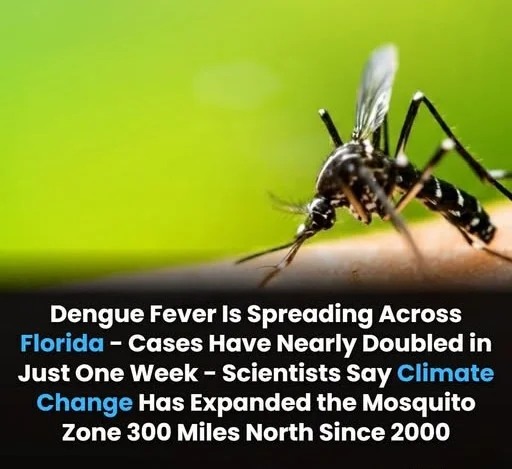
Florida is facing continued concern over mosquito-borne diseases, including dengue fever. Dengue is transmitted primarily by Aedes aegypti and Aedes albopictus mosquitoes, which can also transmit diseases such as Zika and chikungunya.
Warmer temperatures can expand the geographical range and seasonal activity of disease-carrying mosquitoes, but the specific claim that climate change has shifted Florida’s mosquito zone 300 miles north since 2000, or that cases nearly doubled in exactly one week, should be treated cautiously without a primary Florida health-department dataset supporting those numbers.
The broader scientific concern remains significant: temperature, rainfall, urbanization and human movement can all influence where mosquito-borne diseases spread, making surveillance and early detection increasingly important.
Florida is facing continued concern over mosquito-borne diseases,…
Create new listing
×
Post an Ad