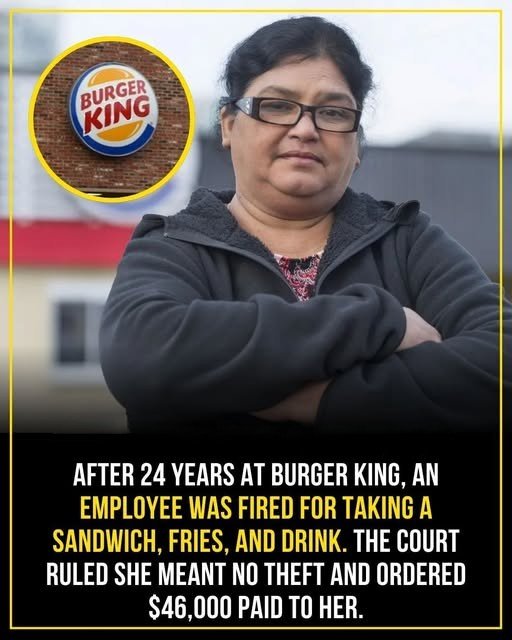
In 2018, a longtime Burger King employee lost her job over a $3 meal — and the fallout became a landmark lesson in workplace fairness.
After 24 years behind the counter at a downtown Burger King, a loyal worker believed she had permission to take home her usual sandwich. That night, she also grabbed fries and a drink — a small meal she thought was allowed. Management disagreed, calling it theft.
Stunned and suddenly unemployed, she found herself facing the devastating reality of losing her livelihood over what she insisted was an honest misunderstanding.
The case went to court, where the judge focused on one key question: Was there intent to steal?
After reviewing her decades of service and the circumstances of the incident, the court concluded she had no malicious intent. In a rare victory for an hourly worker, Burger King was ordered to pay her $46,000 in compensation.
The story has since become a cultural touchstone — a reminder that rigid policies can’t replace human judgment. It sparked national conversations about how companies treat long-term employees, the importance of clear workplace rules, and why compassion still matters in modern corporate life.