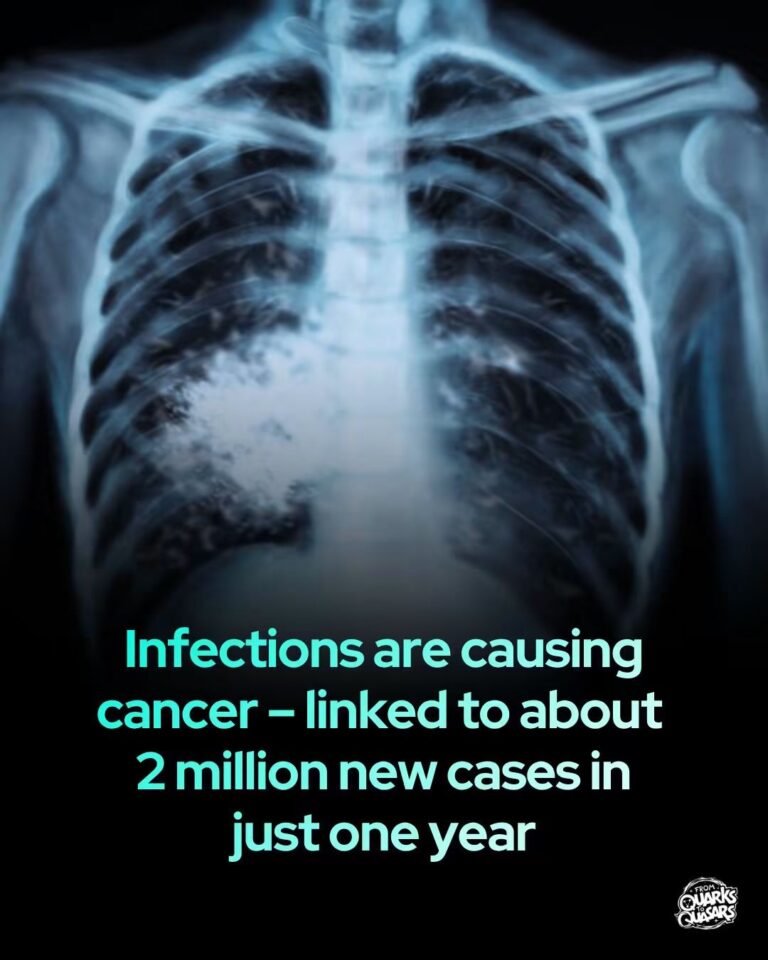
Infections are causing a considerable proportion of new cancer cases.
Some cancers begin with an infection.
A study from the International Agency for Research on Cancer estimates that infections caused about 2.3 million new cancer cases worldwide in 2024 — roughly 12%, or one in eight.
Published in The Lancet Oncology, the findings suggest that a “significant proportion of the global cancer burden is preventable through better infection control,” the IARC researchers said.
Five infections accounted for much of the burden.
Helicobacter pylori, a bacterium that can infect the stomach, was linked to about 760,000 cases, mainly stomach cancer.
Human papillomavirus, or HPV, was linked to about 750,000 cases. These included cervical cancer and cancers of the anus, vulva, vagina, penis and parts of the throat.
Hepatitis B was linked to about 360,000 cases, predominantly liver cancer. Epstein–Barr virus was linked to around 260,000, including certain stomach cancers, nasopharyngeal cancer and Hodgkin lymphoma. Hepatitis C accounted for about 160,000, mainly liver cancer.
These infections can contribute to cancer in different ways. Some interfere with the systems controlling cell growth, while others cause persistent inflammation and tissue damage or weaken immune defenses.
Having one of these infections does not mean someone will develop cancer. Most people with cancer-linked infections never do.
The one-in-eight figure is a worldwide estimate, not the share of U.S. cancers caused by infections. The burden varies between regions.
Tools to reduce these risks already exist. HPV and hepatitis B vaccines can prevent infections, while testing and treatment can address infections such as H. pylori and hepatitis C. Cervical screening can identify changes before they become cancer.
Access remains uneven. Costs, stigma and gaps in healthcare keep prevention and treatment out of reach for many people.
Preventing an infection, or treating it early, can also be a step toward preventing cancer.
Learn more:
“Global burden of cancer attributable to infections in 2024: One in eight cancers worldwide linked to infections.” IARC