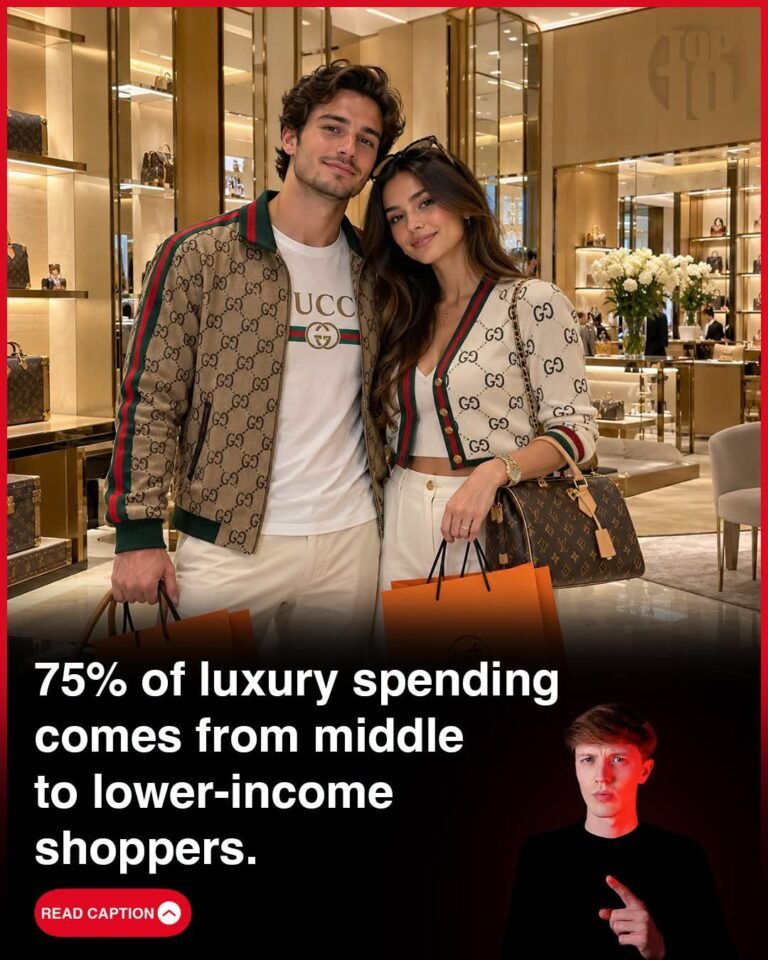
Luxury brands may look like they are built entirely for millionaires and billionaires, but a huge share of the market has historically come from ordinary “aspirational” shoppers.
These are people who may not be extremely wealthy, but still save up for designer handbags, watches, shoes, jewellery and other luxury items.
At one point, this group accounted for roughly three-quarters of the luxury market’s value.
That means a large part of the industry was not being powered by the ultra-rich buying everything in sight.
It was being driven by millions of people making occasional expensive purchases.
Someone might wear normal clothes most of the year, then spend heavily on one designer bag, pair of trainers or luxury watch because they want something that feels special.
This is why luxury brands care so much about aspiration.
They are not only selling products.
They are selling status, identity and the feeling of owning something usually associated with wealth.
And that is also why changes in the economy can hit luxury brands so quickly.
When aspirational shoppers start cutting back, a huge part of the market can disappear with them.