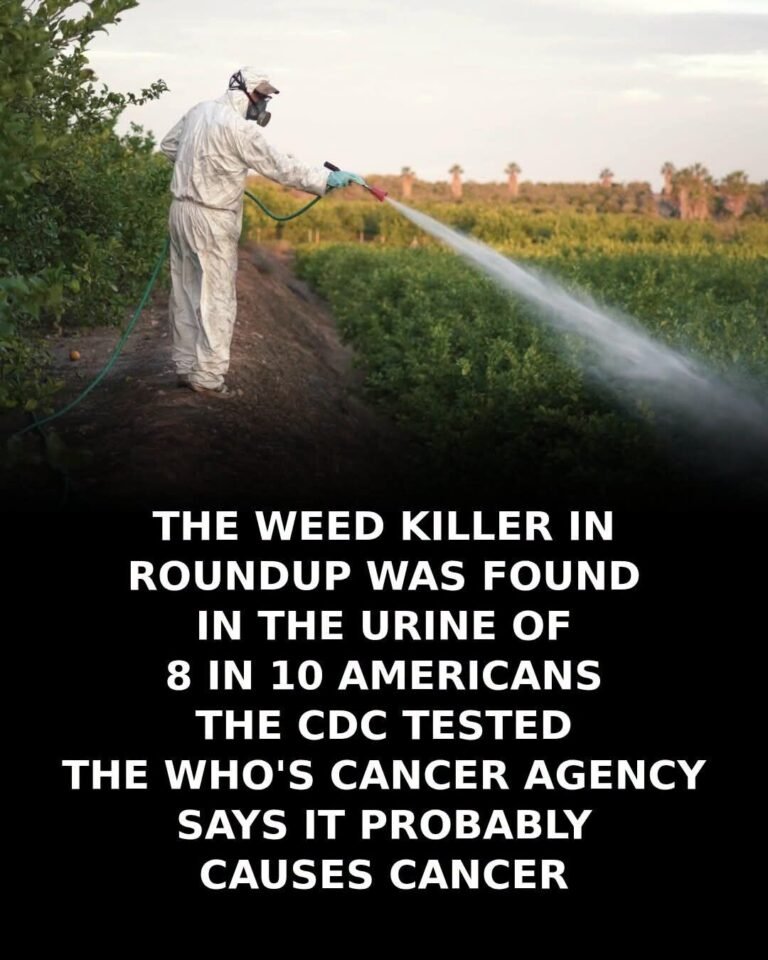
Yes, this is real.
Glyphosate is the weed killer in Roundup, and one of the most used weed killers in the world.
When the CDC tested urine from 2,310 Americans age 6 and older, it found glyphosate in about 8 out of 10 of them. This was from the CDC’s national health survey, 2013 to 2014.
In 2015, the World Health Organization’s cancer agency (IARC) classified glyphosate as “probably carcinogenic to humans.” The US EPA disagrees and has said it is “not likely” to cause cancer. The EPA is reviewing that finding again.
Bayer, which owns Roundup, agreed in 2020 to pay up to about $10.9 billion to settle tens of thousands of lawsuits from people who say Roundup gave them cancer. In 2026 Bayer proposed another $7.25 billion settlement, which a Missouri judge gave early approval in March, but has not yet given final approval.
To be fair: Bayer has not admitted that Roundup causes cancer and says it is safe when used as directed. A settlement ends lawsuits. It is not a court finding that Roundup caused anyone’s cancer. In June 2026 the US Supreme Court ruled for Monsanto in a Roundup case, saying federal law blocks claims that the label needed a cancer warning. The CDC also says that finding a chemical in urine does not by itself mean it causes disease.
Choosing organic foods and washing produce well are two simple ways people try to eat less of it.
Share this with someone who uses weed killer in their yard.
Sources: CDC National Health and Nutrition Examination Survey, 2013 to 2014; IARC Monograph 112, 2015; EPA, “Glyphosate”; Bayer statements, June 2020 and March 2026; US Supreme Court, Monsanto v. Durnell, June 25, 2026; CDC National Biomonitoring Program.